
|

|


How do we know about clouds?
Studying clouds from the air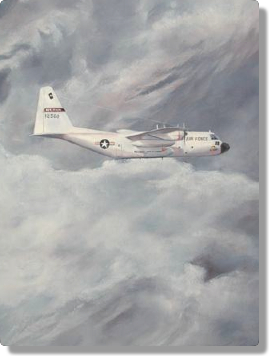 Sometimes the best way to study a cloud is to get into the middle of it. We can
do this with
radiosondes,
which gather data as they rise into the air, and with airplanes. Even though
such airplane flights can be dangerous and unpredictable, sometimes they are the
only way to collect crucial data.
For example, U.S. Air Force and NOAA pilots fly through hurricanes to collect
data that is critical in determining their threat and cannot be obtained from
satellite.
The planes carry between six to fifteen people. The flight crews consist of a
pilot, co-pilot, flight engineer, navigator, and electrical technicians. The
weather crew might consist of a flight meteorologist, lead project scientist,
cloud physicist, radar specialist, and dropsonde operators. A dropsonde is like
a radiosonde, except it is dropped from a plane and gathers data from the top
down, rather than from the bottom up.
The primary purpose of reconnaissance is to track the center of the hurricane's
circulation and to measure the maximum winds. The crews are also evaluating the
storm's size, structure, and development.
Sometimes the best way to study a cloud is to get into the middle of it. We can
do this with
radiosondes,
which gather data as they rise into the air, and with airplanes. Even though
such airplane flights can be dangerous and unpredictable, sometimes they are the
only way to collect crucial data.
For example, U.S. Air Force and NOAA pilots fly through hurricanes to collect
data that is critical in determining their threat and cannot be obtained from
satellite.
The planes carry between six to fifteen people. The flight crews consist of a
pilot, co-pilot, flight engineer, navigator, and electrical technicians. The
weather crew might consist of a flight meteorologist, lead project scientist,
cloud physicist, radar specialist, and dropsonde operators. A dropsonde is like
a radiosonde, except it is dropped from a plane and gathers data from the top
down, rather than from the bottom up.
The primary purpose of reconnaissance is to track the center of the hurricane's
circulation and to measure the maximum winds. The crews are also evaluating the
storm's size, structure, and development.
Studying clouds from the air
Sometimes the best way to study a cloud is to get into the middle of it. We can
do this with
radiosondes,
which gather data as they rise into the air, and with airplanes. Even though
such airplane flights can be dangerous and unpredictable, sometimes they are the
only way to collect crucial data.
For example, U.S. Air Force and NOAA pilots fly through hurricanes to collect
data that is critical in determining their threat and cannot be obtained from
satellite.
The planes carry between six to fifteen people. The flight crews consist of a
pilot, co-pilot, flight engineer, navigator, and electrical technicians. The
weather crew might consist of a flight meteorologist, lead project scientist,
cloud physicist, radar specialist, and dropsonde operators. A dropsonde is like
a radiosonde, except it is dropped from a plane and gathers data from the top
down, rather than from the bottom up.
The primary purpose of reconnaissance is to track the center of the hurricane's
circulation and to measure the maximum winds. The crews are also evaluating the
storm's size, structure, and development.- What it's like inside a hurricane, contributed by Chris Landsea, NOAA/AOML
- Flying through one of the century's largest hurricanes, contributed by NWS scientist Steve Hodanish
- Hurricane Hunters website, the 53rd Weather Reconnaissance Squadron
