
|

|


Measuring weather
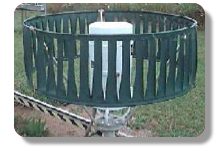 The most common instrument for automated precipitation measurements, and what is
found at most
ASOS stations, is the heated
tipping bucket precipitation gauge. As precipitation is funneled into the
gauge, it lands on a pivoting, two-chamber tipping bucket. The bucket tips when
one chamber is filled with 0.01 inches of precipitation, empties, and allows the
other to fill. Each tip is recorded and summed to report total accumulation
over a specified time period. A wind shield surrounds the gauge to slow the
wind and allow the precipitation to fall vertically rather than at an angle to
provide a more accurate measurement. Heating elements are used to keep the
gauge from freezing in cold weather, below 40 degrees F.
The most common instrument for automated precipitation measurements, and what is
found at most
ASOS stations, is the heated
tipping bucket precipitation gauge. As precipitation is funneled into the
gauge, it lands on a pivoting, two-chamber tipping bucket. The bucket tips when
one chamber is filled with 0.01 inches of precipitation, empties, and allows the
other to fill. Each tip is recorded and summed to report total accumulation
over a specified time period. A wind shield surrounds the gauge to slow the
wind and allow the precipitation to fall vertically rather than at an angle to
provide a more accurate measurement. Heating elements are used to keep the
gauge from freezing in cold weather, below 40 degrees F.
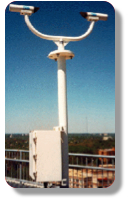 Some ASOS also include precipitation identification sensors, which use LED
lights to tell if it's rain or snow and determine the intensity of
precipitation. As precipitation particles pass through the light beam, they
create shadows on a sensor opposite the light. The shadows are then analyzed to
determine the characteristics of the precipitation. Of course, there are some
difficulties. For instance, drizzle is hard to detect, ice pellets and rain
drops have similar signatures, and insects and spiders may trigger false
reports.
Some ASOS also include precipitation identification sensors, which use LED
lights to tell if it's rain or snow and determine the intensity of
precipitation. As precipitation particles pass through the light beam, they
create shadows on a sensor opposite the light. The shadows are then analyzed to
determine the characteristics of the precipitation. Of course, there are some
difficulties. For instance, drizzle is hard to detect, ice pellets and rain
drops have similar signatures, and insects and spiders may trigger false
reports.
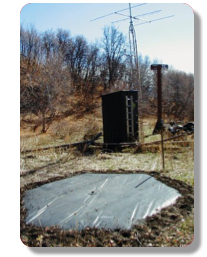 More specialized equipment is sometimes used for automated measurement of frozen
precipitation. Snow pillows, like the one in the photo to the right, can be
found at a number of observation sites in the western United States. These
weigh snowfall and are considered to be quite accurate.
Additionally,
hail pads
are used in many locations around the world to record incidents
of hail. Made of foam wrapped in foil, hail pads are left with indentations
from hail collisions, which serve as a record of their size long after they have
melted. While this must be manually checked later, the observation is
technically automatic.
Next page
->
in situ, surface observations, radiation & clouds
More specialized equipment is sometimes used for automated measurement of frozen
precipitation. Snow pillows, like the one in the photo to the right, can be
found at a number of observation sites in the western United States. These
weigh snowfall and are considered to be quite accurate.
Additionally,
hail pads
are used in many locations around the world to record incidents
of hail. Made of foam wrapped in foil, hail pads are left with indentations
from hail collisions, which serve as a record of their size long after they have
melted. While this must be manually checked later, the observation is
technically automatic.
Next page
->
in situ, surface observations, radiation & clouds
Links and resources
The most common instrument for automated precipitation measurements, and what is
found at most
ASOS stations, is the heated
tipping bucket precipitation gauge. As precipitation is funneled into the
gauge, it lands on a pivoting, two-chamber tipping bucket. The bucket tips when
one chamber is filled with 0.01 inches of precipitation, empties, and allows the
other to fill. Each tip is recorded and summed to report total accumulation
over a specified time period. A wind shield surrounds the gauge to slow the
wind and allow the precipitation to fall vertically rather than at an angle to
provide a more accurate measurement. Heating elements are used to keep the
gauge from freezing in cold weather, below 40 degrees F.
Some ASOS also include precipitation identification sensors, which use LED
lights to tell if it's rain or snow and determine the intensity of
precipitation. As precipitation particles pass through the light beam, they
create shadows on a sensor opposite the light. The shadows are then analyzed to
determine the characteristics of the precipitation. Of course, there are some
difficulties. For instance, drizzle is hard to detect, ice pellets and rain
drops have similar signatures, and insects and spiders may trigger false
reports.
More specialized equipment is sometimes used for automated measurement of frozen
precipitation. Snow pillows, like the one in the photo to the right, can be
found at a number of observation sites in the western United States. These
weigh snowfall and are considered to be quite accurate.
Additionally,
hail pads
are used in many locations around the world to record incidents
of hail. Made of foam wrapped in foil, hail pads are left with indentations
from hail collisions, which serve as a record of their size long after they have
melted. While this must be manually checked later, the observation is
technically automatic.
Next page
->
in situ, surface observations, radiation & cloudsLinks and resources
