
|

|


Measuring weather
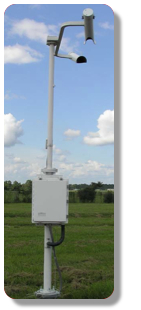 Atmospheric visibility, a measure of how far one can see in given
conditions, is useful information for a variety of daily human activities,
especially in the area of transportation. On the ASOS, a forward scatter sensor
is used to measure visibility. The sensor works by flashing a Xenon light using
wavelengths in the blue part of the visible spectrum into air in front of a
detector. The detector faces north to minimize solar glare and measures the
amount of light scattered off the air and any particles within. This
measurement is related to how far one can see in such air, up to a maximum of
10 miles. It will include the effects of precipitation, sand, dust, and smoke.
Present weather is what the weather is doing right now. This includes
Atmospheric visibility, a measure of how far one can see in given
conditions, is useful information for a variety of daily human activities,
especially in the area of transportation. On the ASOS, a forward scatter sensor
is used to measure visibility. The sensor works by flashing a Xenon light using
wavelengths in the blue part of the visible spectrum into air in front of a
detector. The detector faces north to minimize solar glare and measures the
amount of light scattered off the air and any particles within. This
measurement is related to how far one can see in such air, up to a maximum of
10 miles. It will include the effects of precipitation, sand, dust, and smoke.
Present weather is what the weather is doing right now. This includes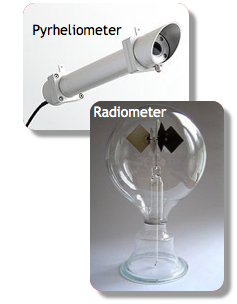 Finally, Surface Radiation observations are important for constructing
energy budgets and keeping records of
sunlight duration and intensity (flux density in Watts per square meter).
Pyranometers are used to measure
incoming solar radiation on a plane surface from the whole 180 degree sky.
Pyrgeometers do the same for
longwave radiation. Pyrheliometers measure the direct solar radiation,
neglecting shortwave radiation reflected off other surfaces like buildings or
the air itself. Most useful for radiation budgets are net radiometers, which
simultaneously measure upward and downward directed shortwave and longwave
radiation. Using this instrument, the
surface albedo can also be
determined.
Next page
->
in situ, surface observations, radiation & clouds
Finally, Surface Radiation observations are important for constructing
energy budgets and keeping records of
sunlight duration and intensity (flux density in Watts per square meter).
Pyranometers are used to measure
incoming solar radiation on a plane surface from the whole 180 degree sky.
Pyrgeometers do the same for
longwave radiation. Pyrheliometers measure the direct solar radiation,
neglecting shortwave radiation reflected off other surfaces like buildings or
the air itself. Most useful for radiation budgets are net radiometers, which
simultaneously measure upward and downward directed shortwave and longwave
radiation. Using this instrument, the
surface albedo can also be
determined.
Next page
->
in situ, surface observations, radiation & clouds
Links and resources
Atmospheric visibility, a measure of how far one can see in given
conditions, is useful information for a variety of daily human activities,
especially in the area of transportation. On the ASOS, a forward scatter sensor
is used to measure visibility. The sensor works by flashing a Xenon light using
wavelengths in the blue part of the visible spectrum into air in front of a
detector. The detector faces north to minimize solar glare and measures the
amount of light scattered off the air and any particles within. This
measurement is related to how far one can see in such air, up to a maximum of
10 miles. It will include the effects of precipitation, sand, dust, and smoke.
Present weather is what the weather is doing right now. This includes- is it precipitating and what kind of precipitation is it, including freezing rain
- is there lightning
- is it windy
Finally, Surface Radiation observations are important for constructing
energy budgets and keeping records of
sunlight duration and intensity (flux density in Watts per square meter).
Pyranometers are used to measure
incoming solar radiation on a plane surface from the whole 180 degree sky.
Pyrgeometers do the same for
longwave radiation. Pyrheliometers measure the direct solar radiation,
neglecting shortwave radiation reflected off other surfaces like buildings or
the air itself. Most useful for radiation budgets are net radiometers, which
simultaneously measure upward and downward directed shortwave and longwave
radiation. Using this instrument, the
surface albedo can also be
determined.
Next page
->
in situ, surface observations, radiation & cloudsLinks and resources
